How Digital Marketing Can Help Textile in 2026: Complete Guide for Textile Brands & Manufacturers
The textile industry is evolving faster than ever. From traditional wholesalers and exhibitions to online marketplaces and AI-driven campaigns, the shift is clear. If you are a textile manufacturer, exporter, fabric supplier, or fashion brand owner, you are probably asking: how digital marketing helps textile businesses grow online in 2026?
In 2026, buyers are no longer waiting for trade fairs. Global sourcing happens through Google searches, LinkedIn connections, Instagram reels, and even AI tools like ChatGPT and Gemini. That is exactly why digital marketing strategies for textile industry in 2026 are not optional anymore—they are essential for survival and growth.
At Arcidigi, we have worked with textile manufacturers, garment exporters, and fabric suppliers to help them generate qualified leads, increase export inquiries, and improve brand visibility. This blog explains everything you need to know about how digital marketing can help textile in 2026, along with trends, strategies, challenges, and ROI insights.
Introduction to How Digital Marketing Can Help Textile in 2026
The textile industry has traditionally relied on:
- Offline exhibitions
- Distributor networks
- Word-of-mouth
- Agent-based exports
But buyer behavior has changed. Today’s B2B and B2C buyers:
- Search suppliers on Google
- Compare pricing online
- Check social media presence
- Read reviews
- Ask AI tools for recommendations
This is where best digital marketing techniques for textile manufacturers come into play.
Digital marketing allows textile businesses to:
- Reach global buyers
- Generate export inquiries
- Build brand authority
- Sell directly through e-commerce
- Track performance with real data
When implemented correctly, digital marketing strategies for textile industry in 2026 create measurable growth. Unlike traditional marketing, you can track clicks, inquiries, conversions, and revenue.
At Arcidigi, we have seen textile clients increase inquiry volume by 2x to 5x within 6–9 months using structured SEO, paid ads, and AI-powered campaigns.
Why It Matters in 2026
The textile market in 2026 is driven by:
- AI search and conversational search
- Voice search queries
- Omnichannel buying journeys
- Global sourcing platforms
- Data-driven decision making
If your website is not optimized for search engines and AI tools, you are invisible.
Here’s why how digital marketing helps textile businesses grow online is especially important in 2026:
- Buyers Start with Search Engines
Before contacting a supplier, buyers search:
- “cotton fabric manufacturer India”
- “sustainable textile exporter”
- “bulk fabric supplier near me”
Applying textile industry SEO tips for fashion brands 2026 ensures your business appears in those searches.
- AI Tools Influence Buying Decisions
Tools like ChatGPT and Gemini suggest companies based on:
- Content quality
- Authority
- Website optimization
- Structured data
That means your textile business must be optimized for AEO (Answer Engine Optimization), GEO (Generative Engine Optimization), and SEO SERP rankings.
- Export Growth Depends on Digital Visibility
If you want to know how to increase textile export sales with digital marketing, the answer lies in global SEO, LinkedIn marketing, and performance ads targeting international buyers.
Key Benefits of Digital Marketing for Textile Businesses
Let’s break down the major benefits of implementing digital marketing strategies for textile industry in 2026.
- Increased Global Visibility
Using:
- SEO
- Google Ads
- LinkedIn campaigns
- International targeting
Textile exporters can reach buyers in the USA, UK, Middle East, and Europe.
At Arcidigi, we helped a Surat-based fabric exporter generate overseas leads through structured SEO and performance marketing.
- Higher ROI Compared to Traditional Marketing
Unlike exhibitions, digital campaigns allow tracking:
- Cost per lead
- Conversion rate
- Revenue per campaign
Understanding digital marketing ROI for textile manufacturers 2026 helps businesses invest smartly instead of guessing.
- Strong Brand Positioning
Through:
- Content marketing
- Influencer marketing
- Social media branding
You can achieve textile branding online using influencer marketing 2026 and position yourself as a premium brand.
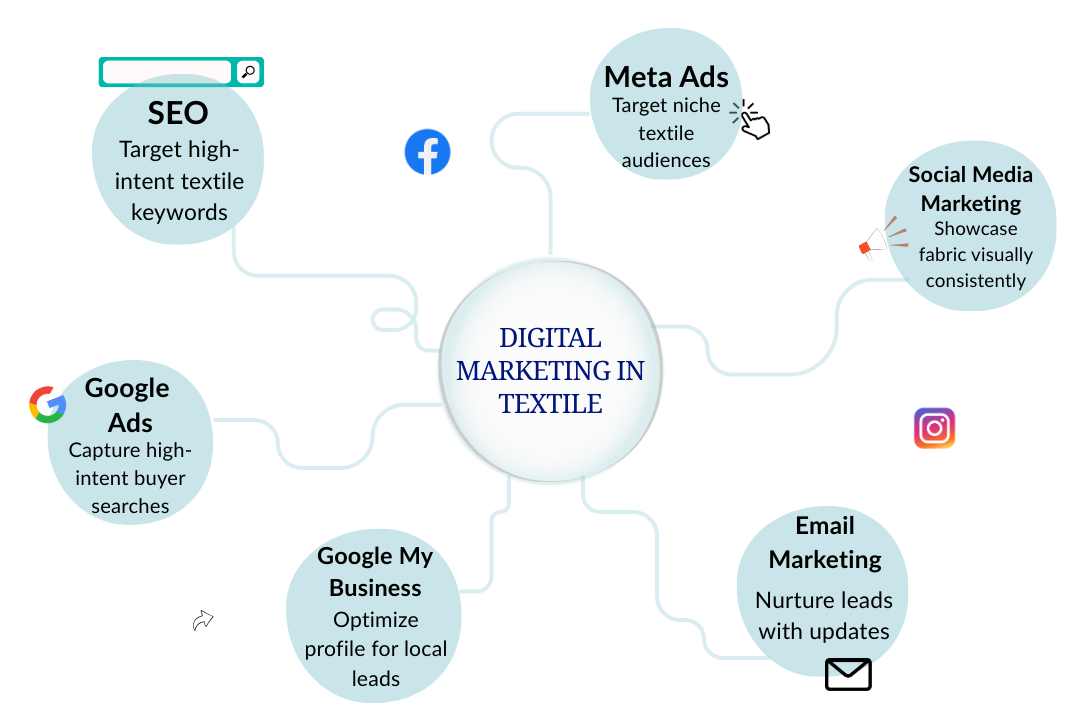
The Shift from Traditional Textile Marketing to Digital-First Growth in 2026
For decades, the textile industry depended heavily on exhibitions, trade agents, distributor networks, and long-term offline relationships. While those methods still have value, they are no longer sufficient in 2026. Global buyers are conducting research online before initiating contact. Even B2B importers now analyze supplier websites, read reviews, check certifications, compare pricing transparency, and evaluate digital credibility. This massive shift in buyer behavior explains why how digital marketing helps textile businesses grow online has become one of the most searched topics among manufacturers and exporters. When a textile company builds strong digital visibility, it does not just gain traffic—it builds authority, trust, and long-term brand equity. At Arcidigi, we have observed that textile brands investing consistently in SEO, AI-driven campaigns, and omnichannel presence outperform competitors who rely solely on traditional marketing. Digital-first growth is not a trend; it is the structural transformation of the textile market.
Building Authority Through Content and Thought Leadership
One of the most underrated yet powerful content marketing ideas for textile companies online is thought leadership. In 2026, search engines and AI platforms prioritize brands that demonstrate expertise. Textile manufacturers who publish blogs about fabric innovations, sustainability practices, dyeing techniques, export compliance processes, and textile market trends automatically position themselves as industry authorities. This improves rankings not only on Google SERP but also within AI tools like ChatGPT and Gemini, which pull information from authoritative web content. Implementing textile industry SEO tips for fashion brands 2026 within these blogs ensures they rank for long-tail, buyer-intent keywords. Additionally, case studies showing measurable results—like how a textile exporter increased inquiries by 150% through SEO—build credibility. These case studies digital marketing textile businesses success strengthen E-E-A-T signals by demonstrating real-world experience and results. Arcidigi consistently recommends that textile brands invest in educational, keyword-rich content as a long-term visibility strategy.
Advanced Omnichannel Marketing for Textile E-commerce in 2026
Modern textile buyers rarely convert after a single interaction. They might first discover a brand through Instagram, then visit the website via Google, later see a retargeting ad, and finally inquire through WhatsApp or email. This is why omnichannel marketing strategies for textile e-commerce 2026 are essential. An integrated ecosystem—website + marketplace listings + Instagram shop + LinkedIn + email automation—creates consistent brand touchpoints. Omnichannel strategies increase buyer confidence because the brand appears active, responsive, and professional across platforms. For textile startups especially, proper digital marketing budget planning for textile startups 2026 should allocate resources to multiple connected channels rather than focusing on one. When implemented correctly, omnichannel systems significantly improve digital marketing ROI for textile manufacturers 2026 because they nurture buyers throughout the decision journey. At Arcidigi, we design textile funnels where each platform supports the other, reducing drop-offs and increasing conversion rates.
Data-Driven Decision Making and Analytics in Textile Marketing
In 2026, guessing no longer works. Textile businesses must rely on measurable insights. Using tools like Google Analytics, Search Console, CRM dashboards, and AI-powered reporting systems allows companies to track analytics and metrics for measuring textile marketing success accurately. Key performance indicators include organic traffic growth, export inquiry conversion rate, cost per qualified lead, and return on ad spend. When textile brands monitor these metrics monthly, they can refine campaigns and eliminate underperforming channels. This approach directly improves digital marketing ROI for textile manufacturers 2026. For example, if paid ads generate traffic but not conversions, the landing page can be optimized. If SEO traffic increases but inquiries remain low, call-to-action placement can be improved. Arcidigi emphasizes structured reporting because transparency builds trust and long-term scalability. Data-driven marketing is what separates growing textile brands from stagnant ones.
Voice Search and AI Search Optimization for Textile Businesses
Another major opportunity in digital marketing strategies for textile industry in 2026 is voice search optimization. Buyers increasingly use conversational queries like “Who is the best organic cotton fabric manufacturer in India?” or “Where can I find bulk textile exporters near me?” Optimizing content for voice search optimization for textile e-commerce 2026 ensures your website appears in featured snippets and AI-generated summaries. This is where AEO (Answer Engine Optimization) and GEO (Generative Engine Optimization) become powerful. Structuring FAQs, adding schema markup, and writing conversational, question-based content improves ranking potential in AI tools. Textile businesses that optimize for AI search gain first-mover advantage. Additionally, implementing AI tools for digital marketing in textiles and fabrics such as predictive analytics, automated chatbots, and smart ad targeting strengthens personalization. These strategies ensure textile brands remain competitive in both search engines and AI-driven platforms.
Export-Focused Digital Expansion Strategies
If your goal is international expansion, understanding how to increase textile export sales with digital marketing is critical. Export buyers typically evaluate suppliers based on digital presence, certifications, transparency, and communication speed. Creating export-focused landing pages optimized with country-specific keywords improves global discoverability. LinkedIn marketing campaigns targeting procurement managers and import agents generate highly qualified leads. Additionally, structured email nurturing supports email marketing automation for textile e-commerce growth and export relationship building. When textile exporters combine SEO, paid ads, and LinkedIn outreach, they build predictable pipelines of overseas inquiries. Arcidigi has implemented export growth strategies for textile manufacturers that resulted in consistent inbound leads from the Middle East and Europe. This proves that global expansion in 2026 depends heavily on strong digital positioning.
AI-Powered Digital Marketing Strategies for Textile Businesses in 2026
AI is transforming marketing. The future of AI tools for digital marketing in textiles and fabrics includes:
- AI content creation
- Predictive analytics
- Automated email sequences
- Chatbots for fabric inquiries
- Smart audience targeting
How Textile Manufacturers Can Leverage AI in Digital Marketing
If you are wondering how textile manufacturers can leverage AI in digital marketing, here are practical methods:
- AI-driven keyword research
- AI-powered ad optimization
- Customer segmentation
- Automated WhatsApp responses
- Demand forecasting
AI helps personalize campaigns, improving analytics and metrics for measuring textile marketing success.
Email Marketing Automation for Textile E-commerce Growth
Using email marketing automation for textile e-commerce growth, brands can:
- Send product launches
- Offer bulk discounts
- Nurture export buyers
- Recover abandoned carts
Automation improves repeat sales and buyer retention.
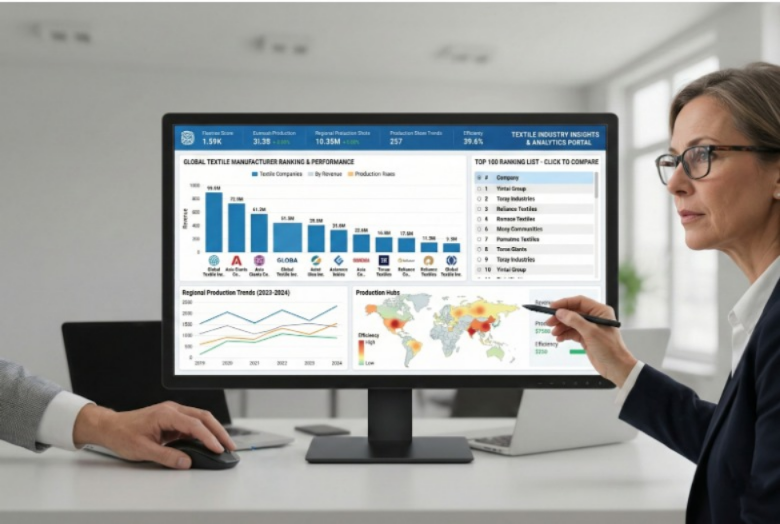
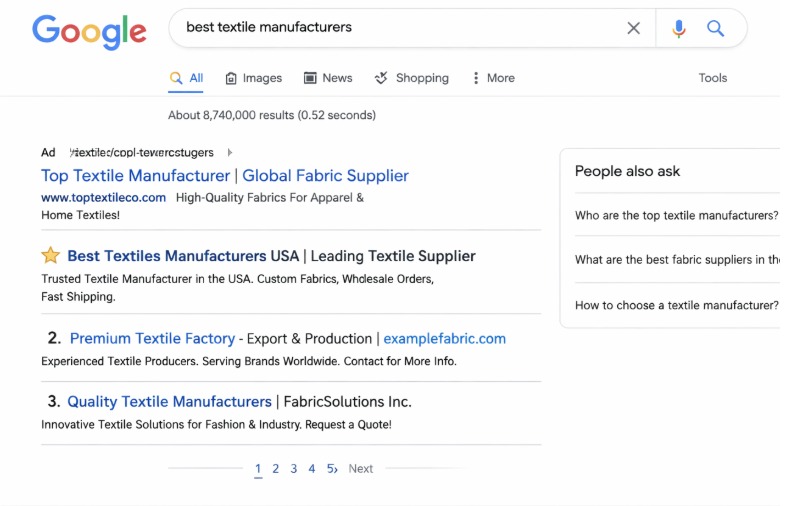
How SEO and Local SEO Help Textile Manufacturers Generate Global Buyers
SEO remains the foundation of digital marketing strategies for textile industry in 2026.
Textile Industry SEO Tips for Fashion Brands 2026
Some powerful SEO practices:
- Keyword-rich product pages
- Optimized meta titles
- Structured data
- Voice search optimization
Applying voice search optimization for textile e-commerce 2026 ensures you rank for queries like:
- “best cotton fabric supplier near me”
- “organic textile exporter in India”
Local SEO for Textile Stores and Fabric Suppliers India
For local businesses, local SEO for textile stores and fabric suppliers India is critical. Optimizing:
- Google Business Profile
- Local citations
- Reviews
- Location pages
helps drive nearby buyers and bulk customers.
How to Increase Textile Export Sales with Digital Marketing
To increase export sales:
- Target international keywords
- Create export-focused landing pages
- Use LinkedIn outreach
- Run global PPC ads
This approach is proven in multiple case studies digital marketing textile businesses success.
Social Media Marketing Strategies for Textile Brands to Increase Online Sales
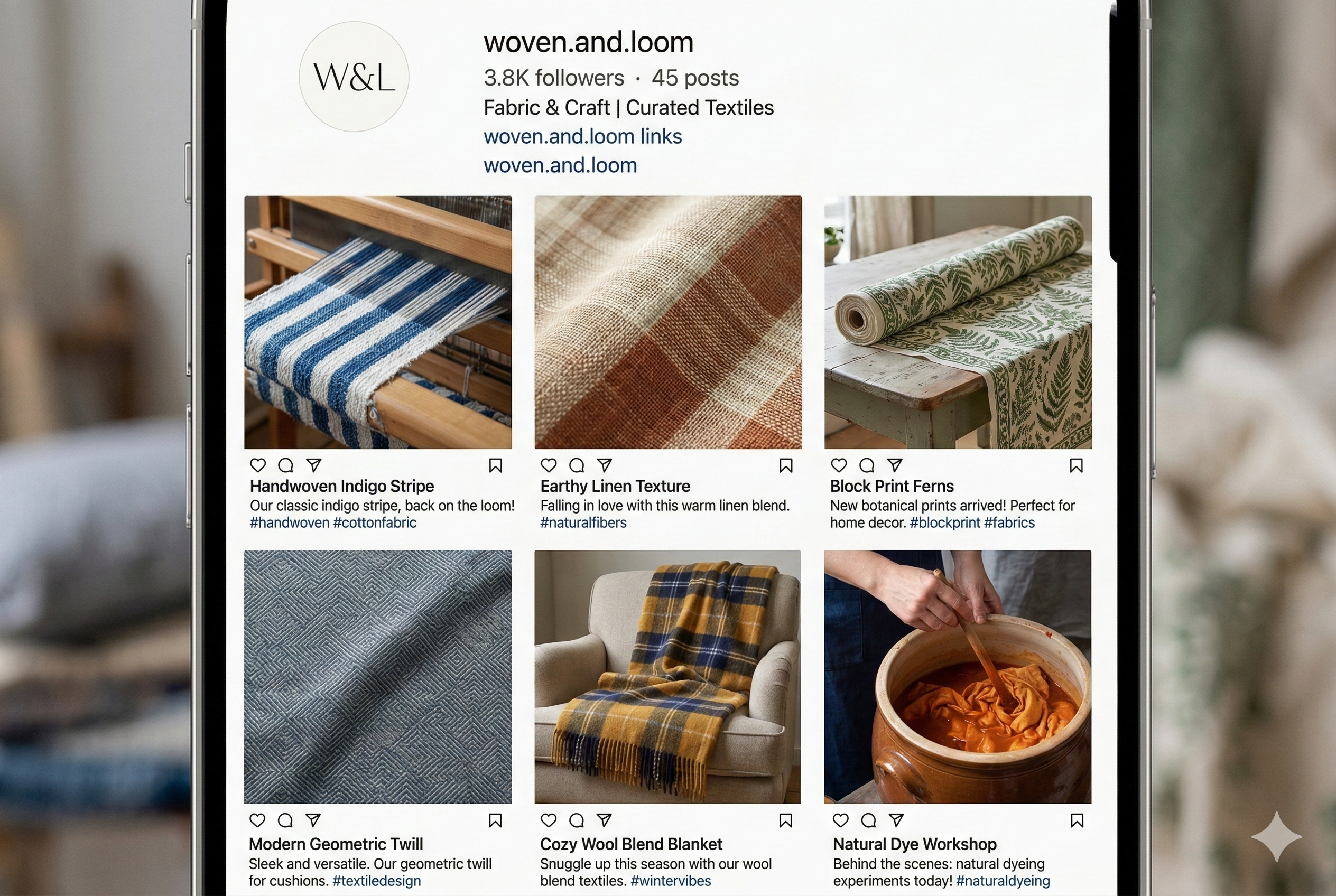
Social media is powerful for B2B and B2C textile brands.
Social Media Marketing for Textile Brands in India
Instagram and Facebook are ideal for:
- Showcasing fabric collections
- Posting reels
- Influencer collaborations
- Behind-the-scenes manufacturing
Effective social media marketing for textile brands in India builds trust and visual appeal.
Content Marketing Ideas for Textile Companies Online
Strong content marketing ideas for textile companies online include:
- Fabric care guides
- Trend reports
- Sustainability blogs
- Export documentation guides
- Manufacturing process videos
This builds authority and supports SEO, AEO, and GEO ranking.
Performance Marketing & Paid Ads for Textile Lead Generation in 2026
Paid advertising delivers fast results.
Digital Advertising Trends in Textile Market 2026
Current trends include:
- Smart bidding
- AI audience targeting
- Performance Max campaigns
- Retargeting ads
Understanding digital advertising trends in textile market 2026 helps textile businesses generate high-quality leads.
Digital Marketing Budget Planning for Textile Startups 2026
For startups, digital marketing budget planning for textile startups 2026 should include:
- 40% SEO
- 30% paid ads
- 20% social media
- 10% tools & automation
Strategic allocation improves digital marketing ROI for textile manufacturers 2026.
Challenges in Digital Marketing for Textile Industry and Solutions
Despite the opportunities, there are challenges.
- High Competition
Solution: Niche targeting and long-tail keywords.
- Low Online Trust
Solution: Add certifications, testimonials, case studies.
- Lack of Technical Knowledge
Solution: Partner with experienced agencies like Arcidigi.
- Budget Mismanagement
Solution: Data-based tracking and clear KPIs.
Addressing digital marketing challenges for textile industry and solutions ensures long-term growth.
Measuring Success: Analytics and Metrics
To track performance, monitor:
- Website traffic
- Conversion rate
- Cost per lead
- ROAS
- Export inquiry growth
Strong analytics and metrics for measuring textile marketing success allow continuous optimization.
At Arcidigi, we implement structured dashboards to monitor campaign performance monthly.
Conclusion: The Future of Textile Growth is Digital
In 2026, the question is not whether digital marketing can help textile businesses—it absolutely can. The real question is whether your textile business is ready to adopt the right digital marketing strategies for textile industry in 2026.
From SEO and AI tools to social media marketing and performance ads, every strategy contributes to sustainable growth. Businesses that understand how digital marketing helps textile businesses grow online will dominate the next decade.
If you want to:
- Increase export inquiries
- Improve online visibility
- Generate quality textile leads
- Build a powerful brand
Then it’s time to act.
Arcidigi specializes in creating customized digital marketing strategies for textile industry in 2026. Our data-driven approach ensures measurable ROI and long-term success.
Contact Arcidigi today to transform your textile business into a global digital brand.
Let 2026 be the year your textile brand leads the market, not follows it.
Digital marketing for textile businesses refers to using online platforms like search engines, social media, websites, and email marketing to promote textile products, attract buyers, and generate sales. It helps textile manufacturers and brands reach wholesalers, retailers, and customers globally.
In 2026, most buyers search for suppliers online before making purchasing decisions. Digital marketing helps textile manufacturers build brand visibility, generate quality leads, showcase products online, and compete in global markets.
Some of the most effective digital marketing strategies for textile brands include SEO for textile websites, social media marketing on platforms like Instagram and Pinterest, Google Ads for product promotion, content marketing, and B2B marketplace listings.
SEO helps textile companies rank higher on Google when buyers search for products like fabrics, garments, or textile suppliers. This increases organic traffic to the website and generates more inquiries from potential customers.
Yes, digital marketing allows small textile businesses to compete with larger brands by reaching targeted audiences online. Even with a small budget, strategies like social media marketing, SEO, and content marketing can generate leads and increase brand awareness.